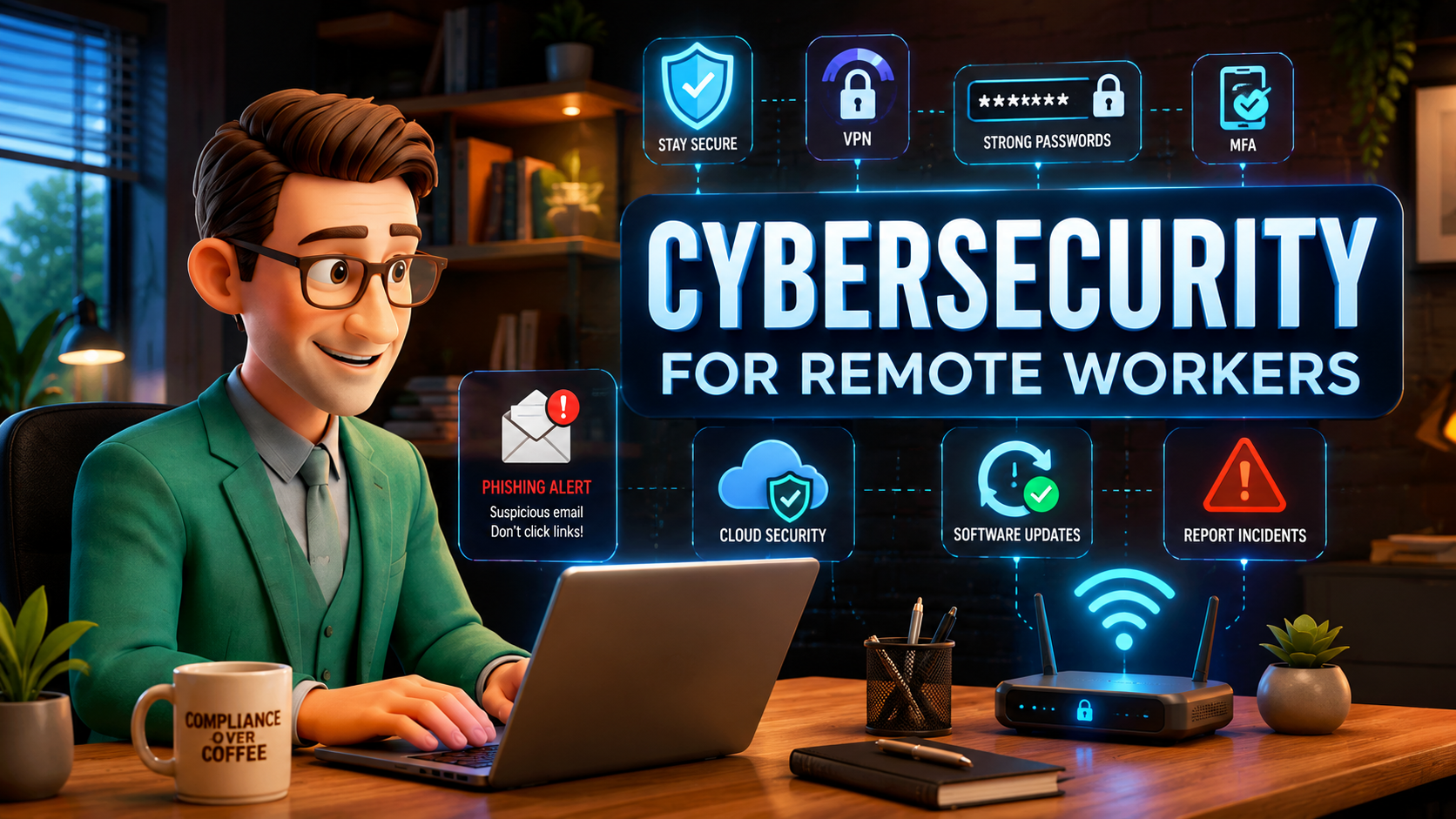
Why Enterprise Cyber Security for Remote Workers Matters
This Cyber Security for Remote Workers course teaches non-technical professionals how to recognize sophisticated phishing attempts, secure network connections, and protect sensitive enterprise data responsibly. Delivered through narrated video storytelling, interactive game checkpoints, and quizzes, it provides a practical, workplace-ready introduction to remote network security, password and MFA hygiene, and safe cloud tool usage, crucial for reducing the risks of data breaches, credential harvesting, and security compliance violations. Deploying an off-the-shelf enterprise cyber security for remote workers module ensures your team understands operational remote security risks without requiring a technical background in IT infrastructure or network security.
Who This Course Is For?
This course is ideal for general employees, business users, team leaders, contractors, and department members who access company resources, cloud environments, or communication channels from outside the traditional office but lack a technical cybersecurity background. As distributed operations expand across every department, Cyber Security for Remote Workers Training is becoming a standard part of workplace compliance and professional development, alongside information security and data privacy training.
What Learners Will Master in This Cyber Security for Remote Workers Training
Learners will master key aspects of working safely and confidently outside the office, including:
- Phishing & Social Engineering Recognition: Spotting sophisticated phishing attempts by identifying red flags like urgent language, suspicious links, and unverified sender details.
- Home & Public Network Hardening: Securing home Wi-Fi networks and understanding essential VPN protocols to protect data when working on public Wi-Fi.
- Credential Hygiene & MFA Adoption: Creating strong, unique passphrases and enforcing Multi-Factor Authentication (MFA) as a critical secondary line of defense.
- Safe Cloud & AI Tool Usage: Navigating approved cloud platforms and AI tools responsibly while keeping all remote devices updated with critical security patches.
- Incident Response & Reporting Workflows: Executing prompt incident reporting procedures to report suspicious emails or potential data exposures immediately.
Engage Learners with Interactive SCORM Cyber Security for Remote Workers Microlearning
Ditch static slide decks for dynamic storytelling. Built as an interactive SCORM module, this 24-minute course uses rich media to maximize retention:
- Narrated Video Scenarios: Real-world workplace examples breaking down remote security fundamentals, phishing red flags, and safe connection practices.
- Gamified Remote Security Training: Interactive Fact/Fiction card game checkpoints testing risk recognition, public Wi-Fi hazards, and credential safety.
- Knowledge Check & Certification: End-of-course 80% passing score quiz assessment ensuring full comprehension before completion tracking in your LMS.
LMS Compatibility & Technical Specifications
Designed to work out of the box with any major Learning Management System (Cornerstone, Docebo, Moodle, Canvas, SuccessFactors, and more).
- Course Type: Off-the-shelf Cyber Security for Remote Workers SCORM course
- Format: Narrated video storytelling, interactive game checkpoints, and quizzes
- Standards Supported: SCORM 1.2 & SCORM 2004 (Full ZIP package included)
- Duration: 24-Minute Microlearning (4 Modules)
- Accessibility: WCAG 2.1 AA Compliant
- Instant Access: Download Cyber Security for Remote Workers SCORM package immediately after purchase or request an enterprise preview file.
Deploy this essential Cyber Security for Remote Workers Training in your LMS today to build a culture of safe, confident, and accountable remote work habits across your organization.