
Compliance Training That Employees Actually Retain
Turn policy documents into scenario-based training your teams remember and regulators can verify
Key Takeaways
- The Core Issue: Traditional compliance relies on passive annual slide decks. Employees memorize definitions to pass a quiz, but freeze or fail when faced with high-stress, real-world events (like phishing, POSH incidents, or data deletion requests).
- 3 Elements of Effective Compliance:
- Behavioral Scenarios: Shift from "what is the policy?" to interactive "what do you do next?" decision-making.
- Continuous Reinforcement: Prevent forgetting through periodic micro-learning (Fact vs. Fiction, flashcards, crosswords) instead of single yearly modules.
- Actionable Analytics: Track decision weak spots across departments to fix knowledge gaps before they turn into real-world violations or audit findings.
- Low-Friction Implementation: Start small by selecting one high-risk topic (e.g., POSH or phishing), deploy 3–5 interactive scenarios to a high-exposure department, gather performance data, and scale across the enterprise.
Compliance training that people actually remember and leaders can defend in an audit
Compliance training is not just a yearly checkbox. It is one of the most practical ways to protect an organisation from avoidable violations, regulatory penalties, reputational damage, and operational disruption.
The problem is that most compliance programs still rely on long videos and static slides. Employees complete them, but they do not build the confidence to respond correctly when a real situation happens—like a customer data request, a phishing email, a POSH complaint, or a safety incident. That is how organisations end up with “completion reports” but repeated incidents and the same audit findings year after year.
Kriya Stack's Course Builder helps compliance, HR, and L&D teams shift from passive training to scenario-based practice, supported by reinforcement and analytics and dashboards so you can see what is working and where teams still need help.
Built for: Compliance Officers, Risk Managers, HR Directors, and L&D teams in 500+ employee organisations.
What is Compliance Training?
Compliance training teaches employees the rules and behaviours that reduce legal and regulatory risk. It typically includes topics such as data privacy, workplace conduct, cybersecurity awareness, ethics, and industry-specific standards.
In many regions, the financial exposure can be significant. For example, GDPR administrative fines can go up to €20 million or 4% of global annual turnover for serious violations, depending on the case.
Compliance training also helps reduce operational disruption. Even one incident can create weeks of firefighting across legal, IT, HR, and leadership. The goal of training is to reduce preventable mistakes by making the right responses easy and familiar.
The most common types of compliance training in enterprises
Most large organisations run multiple compliance programs each year. These are the most common categories:
- Data privacy and data handling (GDPR, CCPA, internal policies)
- Cybersecurity awareness training (phishing, passwords, device security)
- Workplace conduct training (POSH/anti-harassment, DEI conduct, reporting)
- Ethics and anti-corruption (gifts, conflicts of interest, bribery, internal codes)
- Financial controls training (approvals, documentation, separation of duties)
- Industry-specific compliance (healthcare, manufacturing safety, PCI, SOP compliance)
The exact mix depends on your industry and geography. But the training challenge is usually the same: people complete content without building real response habits.
Why traditional compliance training fails in the real world
Traditional compliance training often fails for three simple reasons.
1) It trains memory, not behaviour
Employees may recall definitions during a quiz, but real compliance moments are stressful. People need practice in context, not only information.
2) It is too long and too infrequent
When training happens once a year, forgetting is inevitable. Compliance risk is daily, so reinforcement needs to be periodic and lightweight.
3) It produces “completion proof” instead of “readiness proof”
Completion is easy to report, but it does not show whether employees know what to do when risk appears. Compliance teams need clearer evidence of understanding, response steps, and reinforcement actions.
Compliance Training ROI Calculator (2 minutes)
If you’re trying to build a business case for better compliance training, start with a simple question: how exposed are we right now, and what would improvement actually save us?
Our Compliance Training ROI Calculator gives you a quick risk score (1–10) and a practical ROI summary based on your current completion rate, recent incidents, and the admin effort your team spends chasing completions and preparing for audits.
Get your Compliance Risk Score
Get your Compliance Score, understand your risk level, and see how much you could reduce violations and admin time with a more modern training approach
Give My ScoreWhat good compliance training looks like
Strong compliance programs do three things consistently:
1) They use realistic scenarios
Instead of “what is the policy?”, training asks “what do you do next?”
2) They reinforce learning over time
Short refreshers (weekly or monthly) help policies stick, especially for high-risk teams.
3) They make gaps visible
The goal is not to “catch people out.” The goal is to identify where teams struggle so you can reinforce training before incidents happen.
Scenario examples - What Employees Practice
Here are examples of scenario-based compliance modules that work well in enterprises:
1) GDPR / Data privacy training
An employee receives a customer request for data deletion. The scenario tests whether they follow the correct workflow, verify identity, and escalate correctly, without sharing data in an insecure way.
2) Anti-bribery and corruption
A sales rep is offered tickets to a major event by a client mid-negotiation. The scenario tests whether they decline, accept, or escalate, and shows the consequence of each choice with procurement and legal.
3) Anti-money laundering (AML)
An employee is asked to process an unusually large, time-pressured payment from a new vendor with incomplete documentation. The scenario tests whether they pause for verification or process it to meet a deadline.
4) POSH / Anti-harassment training
A manager receives a complaint from a team member. The scenario walks through the correct first response, documentation steps, confidentiality boundaries, and escalation.
5) Workplace health and safety
An employee notices a blocked emergency exit during a busy shift. The scenario tests whether they report it immediately, flag it for later, or clear it themselves, and shows how each choice affects safety outcomes and audit findings.
6) AI ethics and acceptable use
An employee wants to paste a client contract into a public AI tool to save time drafting a summary. The scenario walks through the data exposure risk and the correct internal alternative.
These scenarios feel more relevant than videos because they mirror the exact decisions employees make at work.
How compliance teams use Kriya Stack in the real world
Compliance training becomes effective when two things happen:
- Employees practise what to do in the moments that create risk, and
- Compliance teams can prove what was trained, what changed, and what needs reinforcement.
Kriya Stack fits into that workflow in three practical ways:
1) Turn policy content into decision practice
Most compliance teams already have legal-approved policies, SOPs, and training material. The gap is turning that into behaviour.
- Use Kriya Stack's Course Builder to convert high-risk moments into short “what would you do next?” simulations.
Examples include data requests, reporting procedures, incident escalation, gifts and hospitality, harassment reporting, and access control. - If you already rely on videos, video gamification helps you add decision checkpoints so learners cannot simply play-and-skip. It turns “watch” into “watch and respond.”
This is where compliance stops being theoretical and starts becoming muscle memory.
2) Reinforce the rules without adding training fatigue
Annual training fails because people forget. But compliance leaders cannot keep assigning long modules.
That is why many teams use lightweight reinforcement formats that feel less like “training” and more like quick checks:
- A Fact or Fiction round to remove common misunderstandings and risky assumptions
- Flashcards for quick recall of critical do’s and don’ts, especially for frontline teams and managers
- Crossword when you want employees to remember key terms and SOP language without switching off
The goal here is not entertainment. It is consistent recall in the moments that matter.
3) See what is confusing people, before it becomes an incident
The biggest operational benefit for compliance teams is not “more completions.” It is early visibility.
With analytics and dashboards, you can answer questions like:
- Which topics are repeatedly misunderstood?
- Which teams or roles are struggling with specific decisions?
- Where do people freeze or choose the wrong path in scenarios?
- What should we reinforce next month?
This makes it easier to run compliance as a continuous program instead of an annual scramble.
Analytics and dashboards that help you act, not just report
Many compliance teams have completion reports but lack clarity on what employees actually understood. With analytics and dashboards, you can move from reporting to action.
You can use the data to:
- Identify topic-level gaps
- Spot patterns across teams and roles
- Plan targeted reinforcement instead of repeating the same training
- Show a clearer audit narrative: what was delivered, how employees performed, and what remediation was applied
This makes compliance training easier to manage and easier to defend during audits, internal reviews, and investigations.
How to implement without making it a massive project
You don’t need to rebuild your entire compliance program to see impact. The most effective rollouts start small, focus on one measurable risk, and scale once the model is working.
A simple rollout path that works for most teams:
- Pick one high-risk area (for example: phishing readiness or POSH reporting)
Choose a topic where mistakes are common and the expected response is clear. - Create a short set of scenarios plus reinforcement activities
Build 3–5 realistic scenarios and pair them with lightweight reinforcement (quick quizzes, fact/fiction, flashcards) to strengthen recall. - Run the first rollout with one or two departments
Start with teams most exposed to the risk (e.g., HR for POSH, finance for phishing), so you get meaningful signals early. - Use analytics to identify weak spots and refine the training
Look for patterns: where learners choose the wrong action, where confidence drops, or which roles need extra reinforcement. - Expand across the organisation with confidence
Once the scenarios and reinforcement are proven, replicate the playbook across more departments with minimal additional effort.
Result: a rollout that improves real-world readiness (not just completion) while creating clearer evidence for internal reviews and audits. Most teams start with a small pilot and see usable insights quickly, then scale once the approach is proven.
Make training measurable and LMS-compatible with Kriya Stack.
Explore more about Kriya Stack and its offering.
Kriya Stack helps compliance teams go beyond tick-the-box training. Convert policies into realistic scenarios, reinforce decisions with micro-learning, and track true readiness—not just completion rates. Improve compliance training effectiveness, reduce violations, and walk into audits with defensible evidence instead of spreadsheets.
Book a Demo
Get a 15 minute walkthrough of our tools and understand how it fits in your training,
Book DemoFAQ
Frequently asked questions
Compliance training software helps organisations deliver, track, and refresh compliance programs like data privacy, cybersecurity awareness, workplace conduct, ethics, and industry-specific SOP training
Scenario-based compliance training uses realistic situations to help employees practise what to do next. It builds decision-making and judgement, not just memorisation.
Most organisations start with their highest-risk areas: data privacy, cybersecurity awareness, and workplace conduct. Then they add role-specific and industry-specific modules
A completion certificate only proves an employee viewed content. Scenario-based training measures decision accuracy, showing whether employees would actually respond correctly in a real compliance situation, which is stronger evidence in an audit.
Prioritize the topic tied to your most recent incident or audit finding, commonly AML for financial services, GDPR for data-heavy businesses, or POSH and workplace safety for people-heavy operations.
Short refreshers monthly or quarterly retain knowledge far better than a single annual session, since compliance risk occurs daily while forgetting sets in within weeks of one-time training.
Yes. Kriya Stack exports SCORM 1.2 and 2004-compliant package and even provides iframe links that work with Cornerstone, Workday, Moodle, SAP Litmos, Docebo, and 50+ other LMS platforms.
Related technology Stories
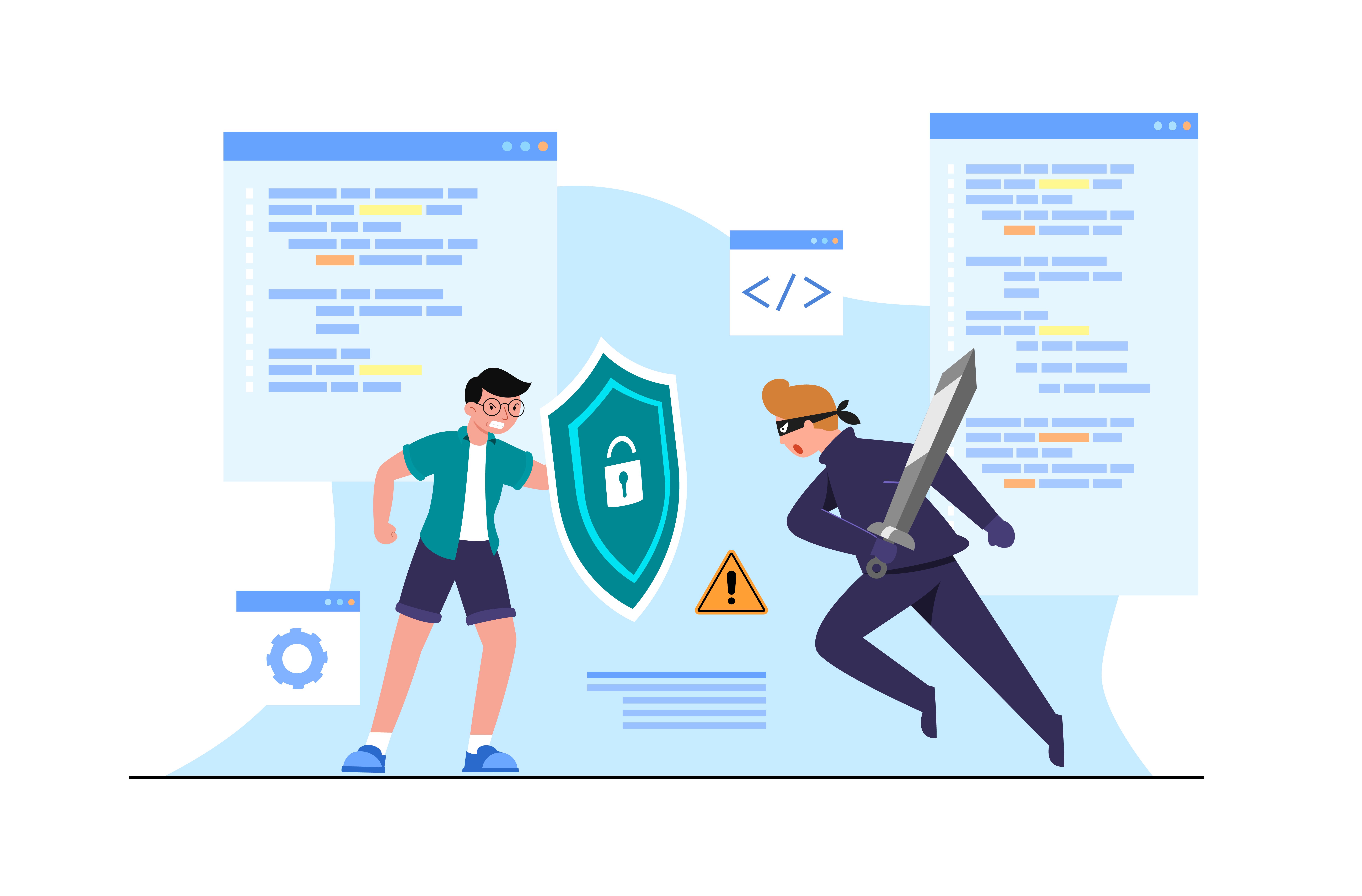
Cybersecurity Awareness Training Software
Build SCORM-compliant cybersecurity training in minutes. Test employee decision-making across phishing, password hygiene, and cloud security with automated risk-tracking dashboards