Soft Skills Training for Employees: Types, Courses, and How to Build a Program in 2027
A practical guide to soft skills training for employees, what counts as training, which skills to prioritize, and how to choose between ready-made courses and custom programs.
Key Takeaways
- Soft skills training spans everything from free PDFs and worksheets to structured, LMS-tracked SCORM courses, the right format depends on scale, consistency, and whether you need to prove training happened.
- Free materials work for one-off sessions but don't scale, they offer no completion tracking, no interactivity, and no way to prove impact across a workforce.
- Five skills create the most workplace friction and are worth prioritizing first: business writing, negotiation, presentation, customer service, and stress management.
- Buy ready-made courses for broadly applicable skills; build custom training only when content needs to reflect your specific tools, processes, or industry.
- When evaluating a soft skills course online, prioritize LMS compatibility, flat-fee pricing, real interactivity, and verified completion tracking over marketing claims.
Soft Skills Training Every Employee Needs in 2027
Most performance problems inside a company don't show up as a skills gap on paper. They show up as a missed deadline because a request was unclear, a client escalation that didn't need to happen, a presentation that lost the room in the first two minutes, or a good employee who quietly burns out because no one noticed the warning signs.
Technical skills get someone hired. Soft skills determine whether they actually work well with the people around them.
That's why soft skills training has become a standing line item for HR and L&D teams rather than an occasional workshop. But "soft skills training" means very different things depending on who's searching for it, a manager looking for a free worksheet to run a lunch-and-learn, an L&D lead comparing structured course providers, or a CHRO trying to decide whether to build a program internally or buy one.
This guide walks through all three: what counts as soft skills training, the core skills worth prioritizing, and how to decide whether to build your own training or buy it ready-made.
What Counts as Soft Skills Training?
Soft skills training covers any structured effort to build interpersonal, communication, and self-management abilities, as opposed to technical or job-specific hard skills. In practice, it takes a few different forms:
- Instructor-led workshops — live sessions, often one-off, good for discussion but hard to scale or track
- Soft skills modules / worksheets and PDFs — free or low-cost static materials, useful for informal team activities but with no built-in tracking or interactivity
- Soft skills curriculum for adults delivered through an LMS — structured, multi-session programs designed for ongoing corporate learning
- Interactive e-learning courses (SCORM) — video-based, scenario-driven modules that plug into your existing LMS and track completion, scores, and engagement automatically
None of these is wrong on its own, the right format depends on your team size, how much consistency you need across locations, and whether you need to prove training actually happened (for compliance, performance reviews, or reporting up to leadership).
Types of Soft Skills Training: DIY Materials vs. Structured Courses
If you've searched for a soft skills training material PDF or soft skills worksheets for adults, you're not alone — there's real demand for free, low-friction resources, especially for small teams or one-off sessions. These materials have a place: they're low-cost, easy to adapt, and fine for informal exercises like a team offsite icebreaker or a single manager-led discussion.
Where they fall short is scale and accountability. A PDF doesn't track who completed it. It doesn't adapt to different learning styles, doesn't hold attention the way video or interactive scenarios do, and gives HR nothing to report when leadership asks whether training is actually changing behavior. For a single session, that's a fair trade-off. For an organization trying to build a consistent soft skills curriculum for adults across departments or locations, it becomes a liability, you end up with training that technically happened but that nobody can verify, measure, or improve.
This is the gap structured soft skills courses are built to close: the same core content, but with video delivery, interactive practice, knowledge checks, and LMS-level tracking that tells you who finished, how they scored, and where they struggled.
Core Soft Skills Courses Every Team Should Prioritize
Not every soft skill deserves equal training investment. These five consistently show up as the highest-friction gaps inside growing teams and each one below is available as a ready-made, interactive course in the Kriya Stack course library.
Business writing and workplace communication. Vague emails, bloated reports, and unclear requests cost more time than most teams realize, not in one dramatic incident, but in the constant back-and-forth of asking for clarification. The Advanced Business Writing Course for Professionals covers reader analysis, report structuring, and executive brevity — the practical mechanics of writing something that gets read and acted on the first time.
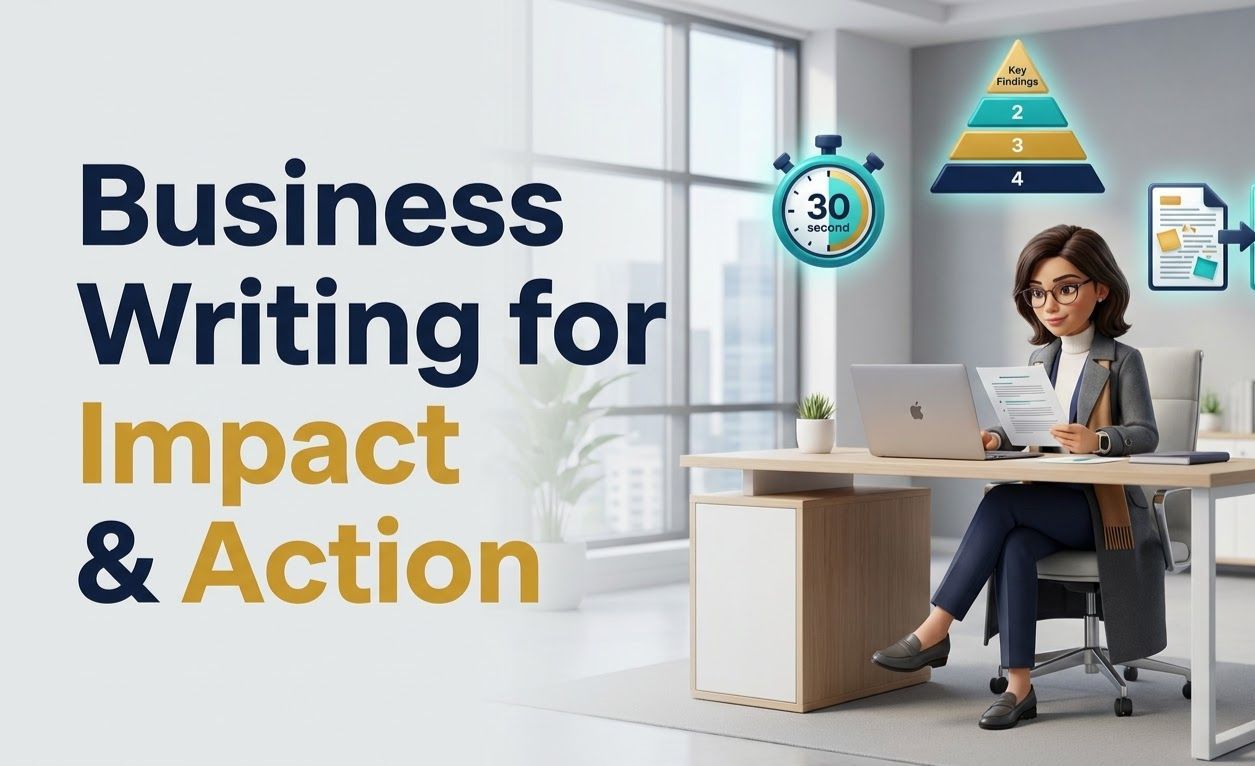
Build business writing skills that help professionals communicate with clarity, create impact, and drive faster decisions and meaningful action
Negotiation skills. This one isn't just for sales. Procurement, account management, and even internal cross-team resourcing conversations all involve some form of negotiation, and most employees have never been trained in it formally. The Advanced Negotiation Skills Training for Sales and Procurement Teams focuses on uncovering real interests and trading concessions strategically, rather than defaulting to discounts.
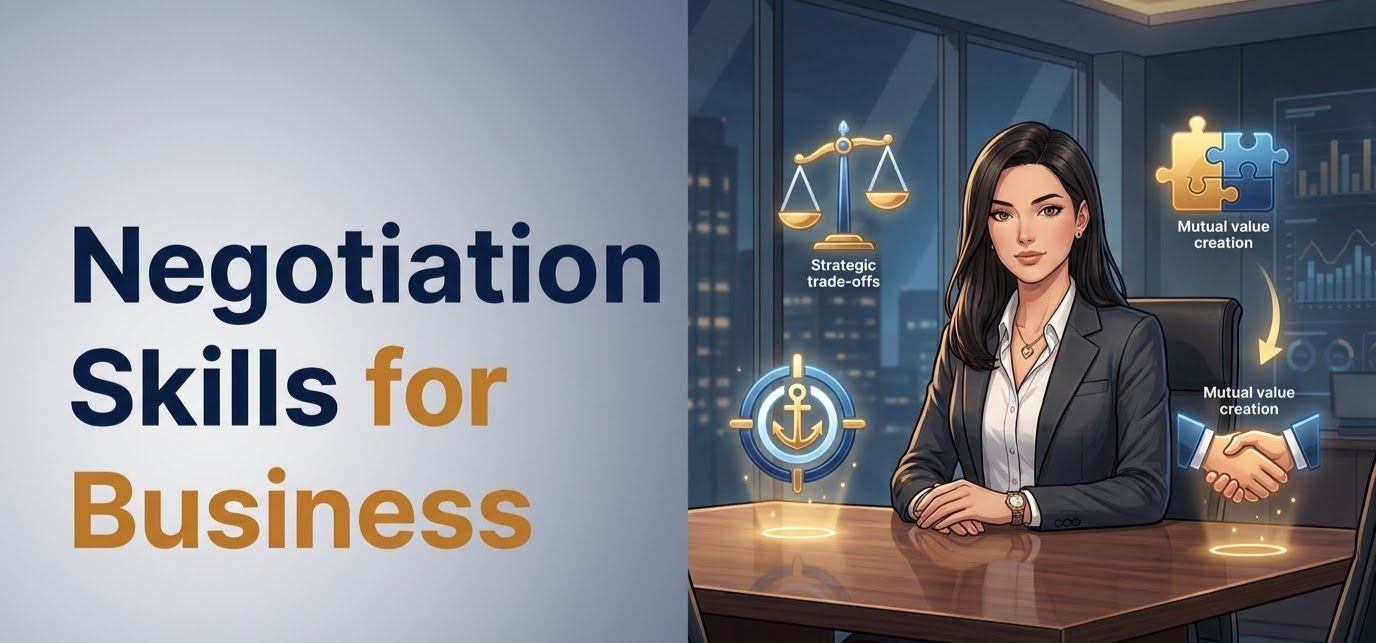
Build practical negotiation skills to manage strategic trade-offs, create mutual value and navigate business negotiations with confidence.
Presentation and storytelling. A presentation that fails to land isn't usually a content problem, it's a structure problem. The Presentation Skills and Storytelling Training walks through narrative structure, slide design, and data storytelling so employees stop dumping information and start guiding an audience toward a decision.
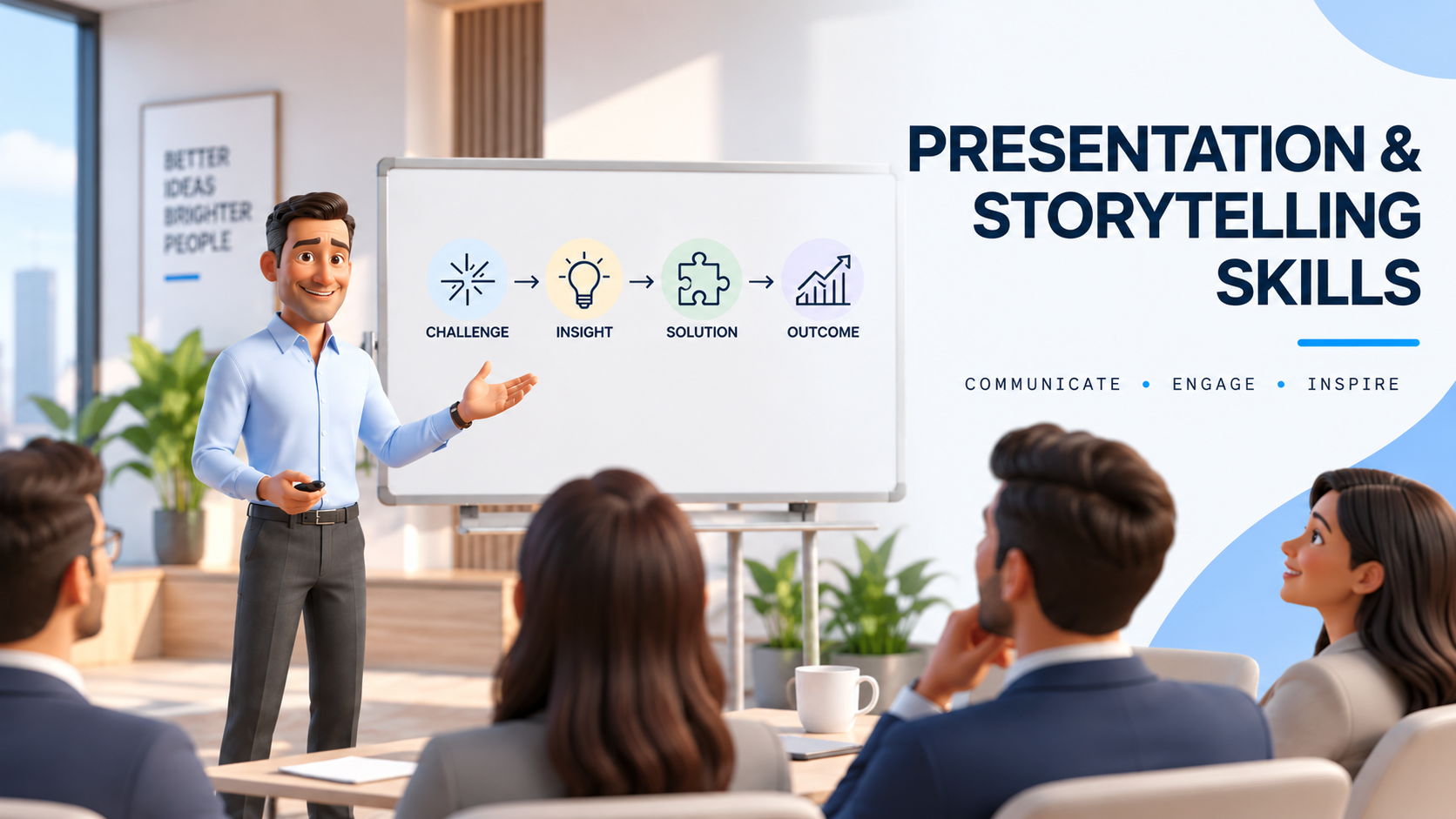
Presentation and storytelling training focused on structuring compelling business presentations using the Challenge–Insight–Solution–Outcome framework.
Customer service and de-escalation. Frontline and support teams face a specific kind of pressure that generic "be friendly" advice doesn't address. The Customer Service Excellence Training for Frontline Staff builds practical conflict-resolution and empathetic-communication skills for the moments that actually escalate.
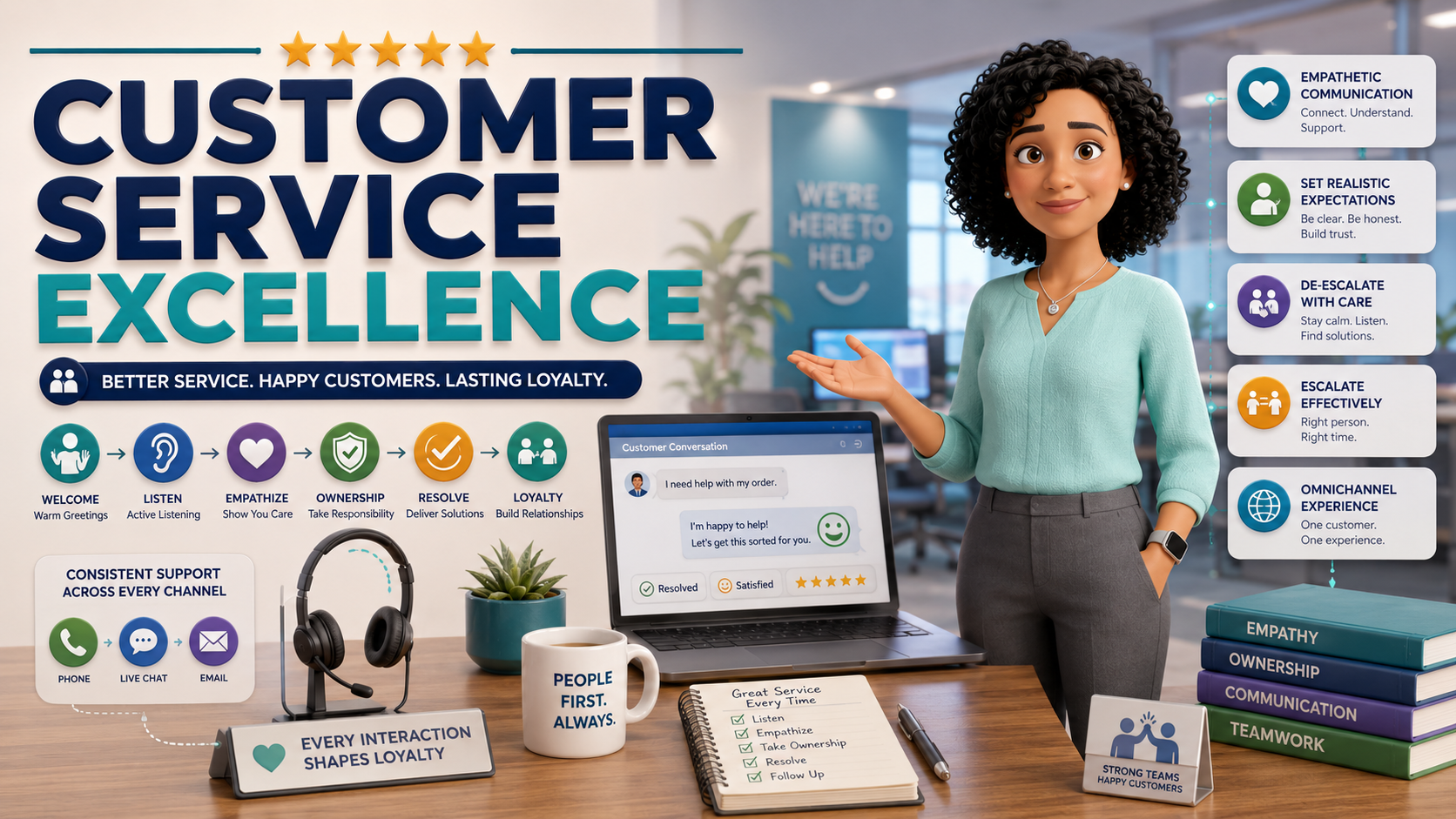
Customer Service Excellence: Interactive training designed to help frontline professionals deliver confident, empathetic, and effective customer support.
Workplace stress management. Burnout rarely announces itself, it builds quietly until it shows up as absenteeism or attrition. The Workplace Stress Management Training for Employees gives employees practical resilience and stress-awareness tools before things reach that point, rather than only offering support after.
Workplace Stress Management Training — Interactive SCORM Course for Employees
Business communication and email etiquette. Beyond formal writing, most day-to-day friction comes from tone, channel choice, and basic digital hygiene, knowing when a quick chat message escalates into a full email thread, or when CC and Reply All quietly cause more confusion than clarity. The Business Communication & Email Etiquette Training is built for general employees and client-facing staff, covering channel selection, professional tone, and resolving misunderstandings before they escalate.
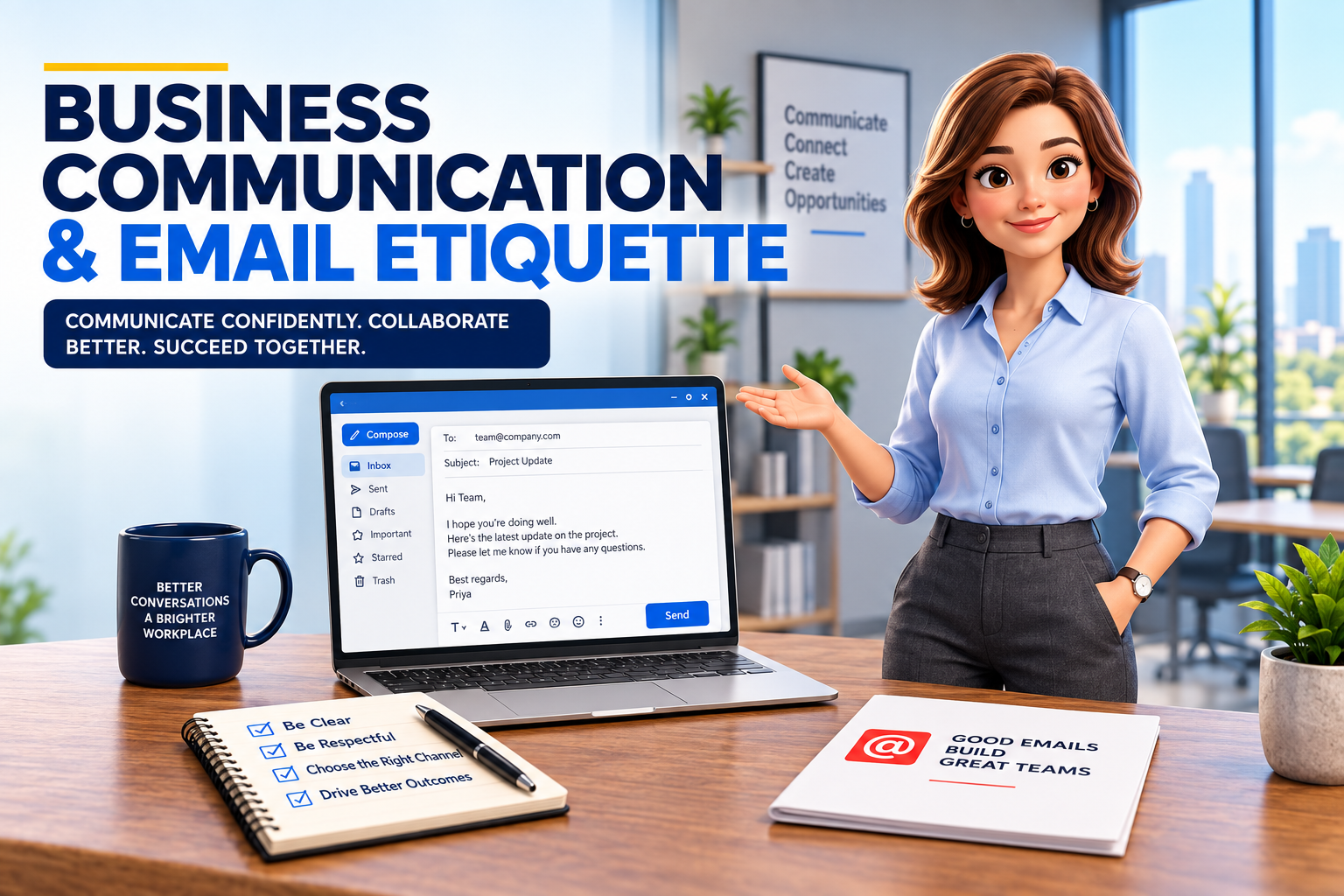
Business Communication & Email Etiquette: Build practical workplace communication skills through professional email writing, effective messaging, and choosing the right communication channel.
Time management and productivity. Missed deadlines and constant context-switching aren't usually a motivation problem — they're a systems problem. Most employees have never been taught how to prioritize competing demands, protect focus time, or run efficient meetings; they just absorb whatever habits happen to stick. The Time Management and Productivity Training for Employees covers prioritization, time blocking, and meeting efficiency — practical structure rather than generic "work smarter" advice.
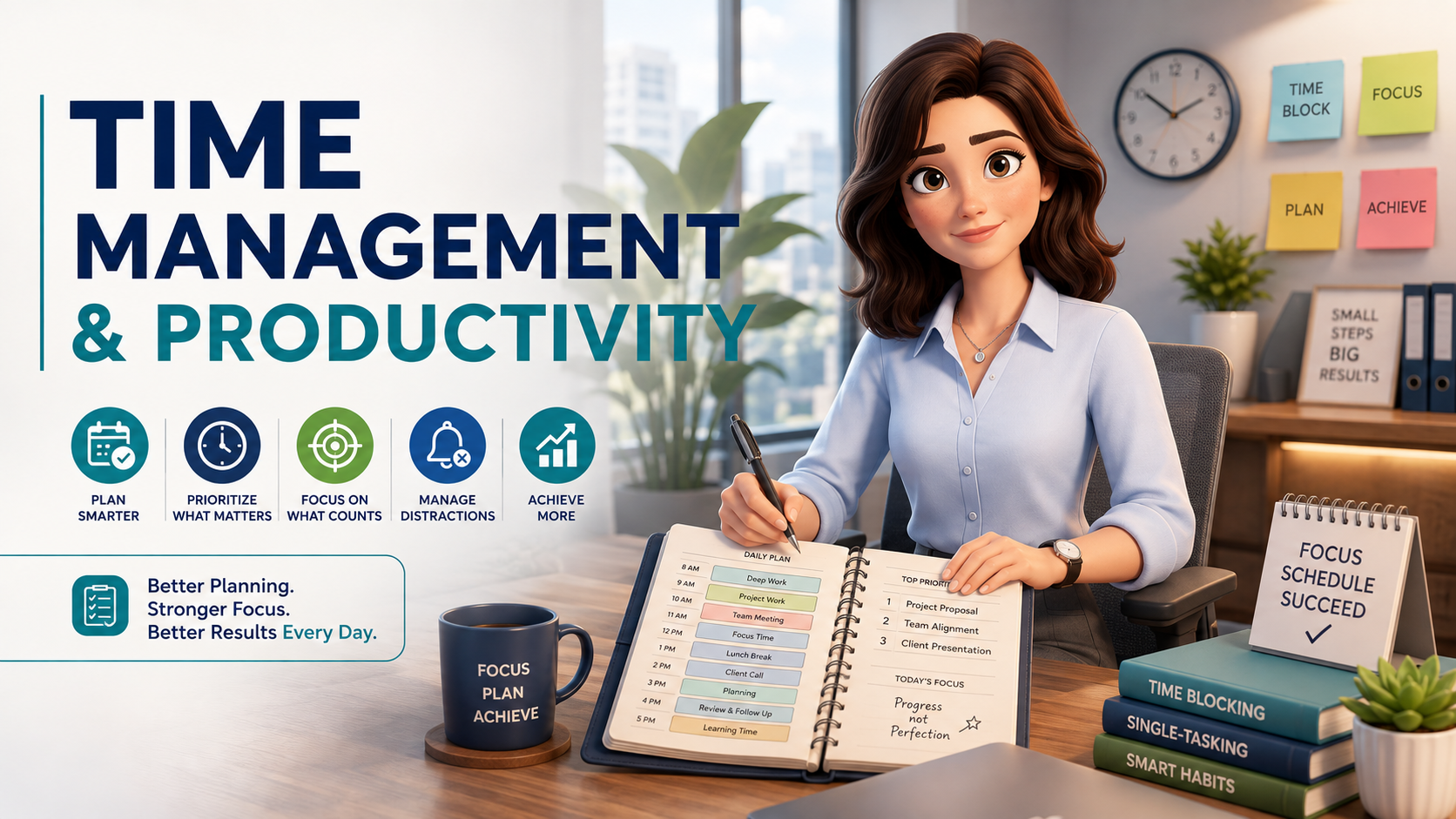
Time Management and Productivity training focused on smarter planning, task prioritization, focus, distraction management, and workplace productivity.
Build Stronger Soft Skills Across Your Workforce
Explore interactive, SCORM-ready, video based, soft skills training designed to help employees strengthen communication, negotiation, presentation, customer service, and other essential workplace competencies. Deploy engaging learning experiences through your LMS and support consistent employee development.
Explore Soft Skills CoursesBuild vs. Buy: Creating Custom Training vs. Buying Soft Skills Courses Online
Once you've identified which soft skills matter most for your team, the next decision is how to deliver the training — and this is where most L&D teams get stuck longer than they need to.
Buying a ready-made course makes sense when the skill is broadly applicable and doesn't need to reference your specific tools, policies, or workflows. Business writing, negotiation, presentation skills, customer service, and stress management are all good candidates for this, the core skill is the same whether you're a healthcare company or a logistics firm, so there's little value in building it from scratch. A soft skills course online in this category can be downloaded, uploaded to your LMS, and assigned the same day.
Building custom training makes more sense when the content needs to reflect something specific to your organization, internal tools, a proprietary sales process, industry-specific compliance language, or company-specific case studies. This is where a platform like Course Builder fits: rather than starting from a blank page or hiring outside instructional designers, teams can combine modules, add assessments, and structure a full learning journey using AI-assisted creation tools, while still exporting SCORM-compliant packages for their existing LMS.
Most organizations end up using both, buying ready-made courses for universal skills and building custom modules for anything tied to their specific processes or industry.
What to Look for in a Soft Skills Course Online
If you're evaluating vendors or comparing a soft skill development course against another, a few practical criteria matter more than marketing copy:
- LMS compatibility — confirm native SCORM 1.2 or SCORM 2004 support so the course works with your existing platform (Cornerstone, Docebo, Moodle, SuccessFactors, and similar) without conversion headaches. Verify SCORM 1.2 and SCORM 2004 compatibility before deploying your training.
- Pricing structure — flat-fee, unlimited-learner licensing avoids the per-seat costs that make scaling training expensive as headcount grows. Compare SCORM licensing models before selecting a provider
- Interactivity, not just video — scenario-based exercises, knowledge checks, and branching activities produce better engagement and retention than passive video-only content
- Completion tracking — the course should report back real data (completion, scores, time spent) to your LMS, not just a "watched" flag
- Accessibility compliance — WCAG-compliant courses ensure the training actually works for your full workforce
These are the same questions worth asking whether you're evaluating a single module or building out a full soft skills curriculum for adults across your organization.
Soft skills training doesn't have to mean choosing between a free worksheet and a six-month internal build. Browse the Kriya Stack course library to see ready-made, interactive soft skills courses you can deploy today, or use Course Builder to create training tailored to your team.
Related Articles Worth Exploring
Related Articles

5 Signs Your Compliance Training Isn't Actually Working
Learn why compliance training often fails to change employee behavior and how scenario-based, role-specific training can improve judgment, reduce violations, and strengthen compliance outcomes.
How to Train a Distributed Manufacturing Workforce on Safety Compliance
A practical guide for training managers, EHS leads, and L&D teams running safety programs across multiple plants, shifts, and contractor crews.